
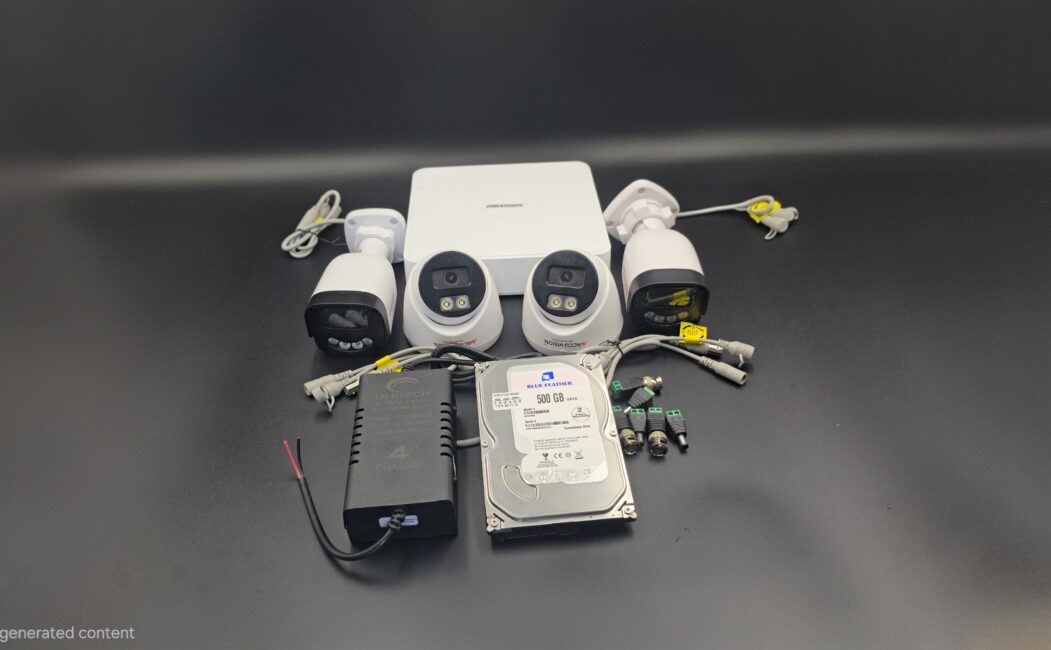
How Does a CCTV Camera Work?
A CCTV (Closed-Circuit Television) camera works by capturing video footage and transmitting it to a recording and viewing system for security and monitoring purposes. It is widely used in homes, offices, shops, factories, and public places to ensure safety and surveillance.
Step-by-Step Working of a CCTV Camera
1. Video Capture
The CCTV camera uses a lens and image sensor to capture video. When light enters the lens, the image sensor converts it into an electronic signal.
2. Signal Processing
The captured signal is processed inside the camera. In analog cameras, the signal is sent directly to a DVR. In IP cameras, the video is converted into digital data and transmitted over a network.
3. Video Transmission
- Wired CCTV cameras transmit video through coaxial or Ethernet cables
- WiFi cameras transmit video wirelessly through an internet connection
4. Recording (DVR / NVR)
The video is stored in:
- DVR (Digital Video Recorder) for analog cameras
- NVR (Network Video Recorder) for IP cameras
Footage is saved on a hard disk and can be stored for days or weeks depending on storage capacity.
5. Live Viewing & Playback
Users can watch live video or recorded footage on:
- Monitor or TV
- Computer or laptop
- Mobile phone via a CCTV app
Remote viewing is possible through the internet.
Additional CCTV Features
Modern CCTV systems include advanced features such as:
- Night Vision for low-light recording
- Motion Detection alerts
- Audio Recording (in supported models)
- Cloud Storage
- Mobile App Access
Why CCTV Cameras Are Important
- Helps prevent theft and crime
- Improves safety and monitoring
- Provides proof during incidents
- Enables remote surveillance anytime
Conclusion
A CCTV camera works as a complete security solution by capturing, recording, and displaying video footage in real time. With modern technology, CCTV systems now offer smart features that make security easier, smarter, and more reliable.
Leave a Reply