
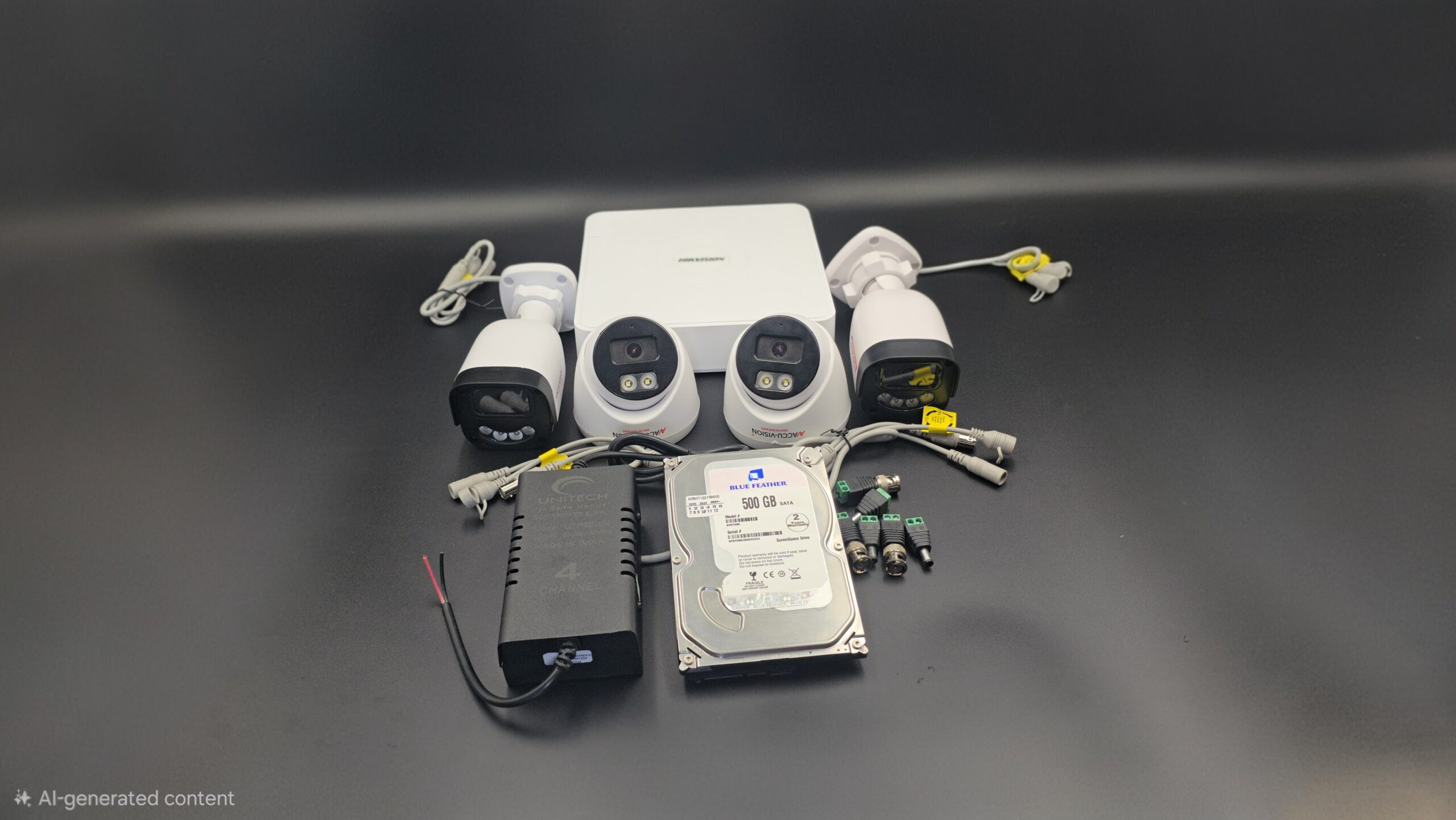
8 Channel DVR vs NVR
8-Channel DVR vs NVR: Which Surveillance System Should You Choose?
When planning a CCTV security system, one of the first decisions you’ll face is choosing between a DVR (Digital Video Recorder) and an NVR (Network Video Recorder). Both systems can support 8 channels (meaning up to 8 cameras), but they use very different technologies and are suited to different use-cases.
In this article, we’ll break down the key differences, pros and cons, and help you decide which option is best for your security needs.
What Is an 8-Channel DVR?
An 8-Channel DVR system connects up to 8 analog CCTV cameras via coaxial cables. It records video digitally onto the DVR’s internal hard drive.
How It Works
- Cameras connect directly to the DVR using coaxial cables (RG59/RG6)
- Video is processed and stored on the DVR’s hard disk
- You can view footage on a monitor or remotely via app/software
Common Uses
- Residential properties
- Small offices and shops
- Budget-friendly installations
What Is an 8-Channel NVR?
An 8-Channel NVR system supports up to 8 IP cameras. NVRs receive digital video data transmitted over network cables (typically Cat5e/Cat6).
How It Works
- Cameras connect over Ethernet via a network switch or directly through PoE ports (Power over Ethernet)
- Video is recorded on the NVR’s hard disk
- Access footage via internet, app, or local monitor
Common Uses
- Modern commercial buildings
- Smart homes
- Offices requiring high-resolution video
DVR vs NVR: Side-by-Side Comparison
| Feature | 8-Channel DVR | 8-Channel NVR |
|---|---|---|
| Camera Type | Analog | IP (Digital) |
| Video Quality | Up to 1080p (varies by system) | Up to 4K and higher |
| Cabling | Coaxial + Power cables | Cat5e/Cat6 (data + power via PoE) |
| Installation | Moderate | Easy with PoE |
| Remote Access | App/Software | App/Software |
| Cost | More budget-friendly | Slightly higher investment |
| Scalability | Limited | Highly scalable |
| Advanced Features | Basic | AI, motion detection, analytics |
| Power Over Ethernet (PoE) | No | Yes (with PoE NVR) |
Main Differences Explained
1. Video Quality
NVR systems have the edge when it comes to clarity. IP cameras can go up to 4K resolution, offering sharper footage especially useful for identifying faces or license plates. DVR cameras usually top out at Full HD or 2MP/4MP.
Winner: NVR
2. Cabling and Installation
DVRs require separate power and video cables for each camera. With NVRs that support PoE, a single Ethernet cable carries both power and data — making installation cleaner and easier.
Winner: NVR (for ease)
3. Cost
8-Channel DVR setups are generally more affordable upfront, especially if you already have coaxial cabling in place. NVR systems might cost more due to IP cameras and PoE infrastructure.
Winner: DVR (for budget)
4. Smart Features
IP cameras connected to an NVR often support advanced analytics like:
- Motion zones
- Line crossing alerts
- Object tracking
- People counting
Traditional DVR systems usually have simpler features.
Winner: NVR
5. Scalability
Adding more cameras and features is easier with NVR systems, especially in IP network infrastructures. DVR systems are more limited.
Winner: NVR
Which One Should You Choose?
Your choice depends on your needs:
Choose an 8-Channel DVR if:
- You want a cost-effective system
- You have existing coaxial cabling
- You need basic surveillance without advanced features
- You’re securing a small office or home
Choose an 8-Channel NVR if:
- You want high-resolution footage
- You prefer easy installation with PoE
- You want smart analytics and remote management
- You’re building a scalable system
Real-World Examples
✅ Small Store: An 8-Channel DVR works great for basic monitoring without hefty costs.
✅ Office Campus: An NVR setup with 4K IP cameras helps identify events clearly and supports future upgrades.
Cost Breakdown (Approximate)
| Component | DVR System | NVR System |
|---|---|---|
| 8 Cameras | Lower | Higher |
| Recorder | Lower | Higher |
| Cabling | Analog + Power | Ethernet (lower cabling cost) |
| Features | Basic | Smart, AI |
Final Thoughts
Both 8-Channel DVR and NVR systems are capable surveillance solutions, but they serve different needs.
-
DVR: Best for budget projects with basic requirements.
-
NVR: Ideal for modern, smart, scalable surveillance with higher video quality.
At the end of the day, choosing the right system means understanding your goals, budget, and future needs.
Recent Comments